Clematis Pests and Diseases
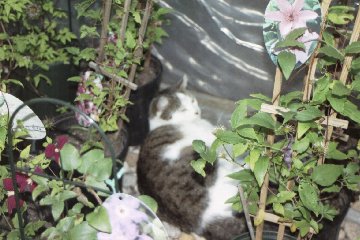
We sometimes find odd pests on our clematis...
Fortunately, clematis don't have many pests. Deer don't like them and neither do slugs! Rabbits and chipmunks are sometimes a problem, nibbling on young new shoots as they come up in the spring. If you have rabbit or chipmunk problems, the best solution is to protect the stems with a barrier of some type. One of the most effective barriers we've seen was a large soda bottle with the top and bottom removed. The bottle was then slit length wise and wrapped around the young stems. That provided protection tall enough that the plant was protected while it was young and tender. Another possible barrier against rabbits is chicken wire, held out from the stems about 6 inches.
Powdery mildew is a fungal disease that sometimes affects clematis, along with roses and lilacs. It gives leaves the appearance of being dusted with flour. Watch for it especially during hot, humid weather. We've had pretty good results spraying affected plants with an ounce of baking soda mixed with a gallon of water. You can add a drop of dish detergent; some folks think it makes the mix a tad more effective. We've also heard (but never tried) that milk, mixed 1:3 with water and sprayed on the leaves works well. Here's a web site with more information: Powdery Mildew
Clematis wilt is the biggest bane of gardeners. We'll discuss that on the next page.
Powdery mildew is a fungal disease that sometimes affects clematis, along with roses and lilacs. It gives leaves the appearance of being dusted with flour. Watch for it especially during hot, humid weather. We've had pretty good results spraying affected plants with an ounce of baking soda mixed with a gallon of water. You can add a drop of dish detergent; some folks think it makes the mix a tad more effective. We've also heard (but never tried) that milk, mixed 1:3 with water and sprayed on the leaves works well. Here's a web site with more information: Powdery Mildew
Clematis wilt is the biggest bane of gardeners. We'll discuss that on the next page.